15 Jan Why Sleep Quality Impacts Strength More Than Workout Intensity
As you work toward your fitness goals, you can train hard, follow a solid program, and use the best muscle growth supplement, but if your sleep quality is poor, your strength gains stall. Many people focus on workout intensity as the main driver of progress. More weight. More reps. More sweat. But strength does not improve during your workout. It improves when your body recovers, repairs, and adapts afterward. That recovery depends heavily on how well you sleep.
- How Sleep Drives Muscle Growth and Strength
- The Impact of Poor Sleep on Strength Performance
- Sleep vs. Workout Intensity: Why Recovery Wins
- Improving Sleep Quality for Better Muscle Growth
- Train Smarter With Flex Fitness
Sleep is not just rest. It’s an active, productive time for your body. While you sleep, your muscles rebuild, your nervous system resets, and key hormones are released to support strength and size. When sleep is short or inconsistent, those processes break down, and your workouts might feel harder, your progress slows, and your risk of injury increases, even if your training plan looks perfect on paper.
Let’s explore further how sleep quality directly impacts muscle growth and strength, and why it often matters more than how hard you train.
How Sleep Drives Muscle Growth and Strength
Muscle growth starts with training, but it finishes while you sleep. When you lift weights, you create small amounts of muscle damage and fatigue. Sleep gives your body the time and resources it needs to repair that damage and build stronger muscle fibers. During deep sleep, muscle protein synthesis increases. It’s the process where your body uses amino acids from the food you eat to rebuild and strengthen muscle tissue. Without enough quality sleep, that process slows down, even if your nutrition and training are on point.
Moreover, deep sleep triggers the release of key hormones tied to strength. Growth hormone peaks during slow-wave sleep and plays a major role in muscle repair, fat metabolism, and tissue recovery. Testosterone, another hormone linked to strength and muscle mass, is regulated by sleep quality. Short or disrupted sleep lowers testosterone levels, which can directly reduce your ability to gain strength over time. That’s why sleep muscle growth is not just a fitness slogan, but a real physiological process.
The Impact of Poor Sleep on Strength Performance
When sleep quality drops, the effects show up quickly in your performance, and you might still get through your workouts, but your strength, control, and recovery all take a hit. Over time, poor sleep creates a gap between effort and results.
Lower Power
Poor sleep reduces your ability to generate force. Studies consistently show that sleep deprivation leads to lower strength output, slower reaction time, and impaired cognitive performance. Even if your muscles feel ready, your nervous system might not be. Strength depends heavily on how well your brain can send signals to your muscles, and sleep loss weakens that connection. That’s why lifts feel heavier than usual after a bad night of sleep.
Slower Recovery
Sleep is when recovery happens. Without it, fatigue lingers. Poor sleep reduces muscle repair and increases inflammation, meaning soreness lasts longer between workouts. That can force you to train less frequently or lower your intensity just to get through sessions. Reduced recovery limits how much volume and progression your body can handle, and you might still train hard, but your results plateau because your system never fully resets.
Higher Injury Risk
Lack of sleep increases injury risk in two major ways. First, tired muscles and joints absorb stress poorly, placing more strain on connective tissue. Second, poor sleep slows reaction time and reduces body awareness, increasing the chance of technical errors. Small mistakes under load can lead to joint pain, strains, or overuse injuries. When sleep is short, the ability of your body to protect itself drops, even if your training plan and equipment are solid.
Sleep vs. Workout Intensity: Why Recovery Wins
Many people believe that pushing workouts harder can make up for poor sleep. In reality, high-intensity training cannot override a lack of recovery. Heavy lifting and intense sessions create stress on your muscles and nervous system. Sleep is what allows your body to adapt to that stress. When sleep quality is low, your body struggles to repair muscle tissue, restore energy, and strengthen neural pathways. That means the harder you train while sleep-deprived, the more fatigue you accumulate without getting stronger.
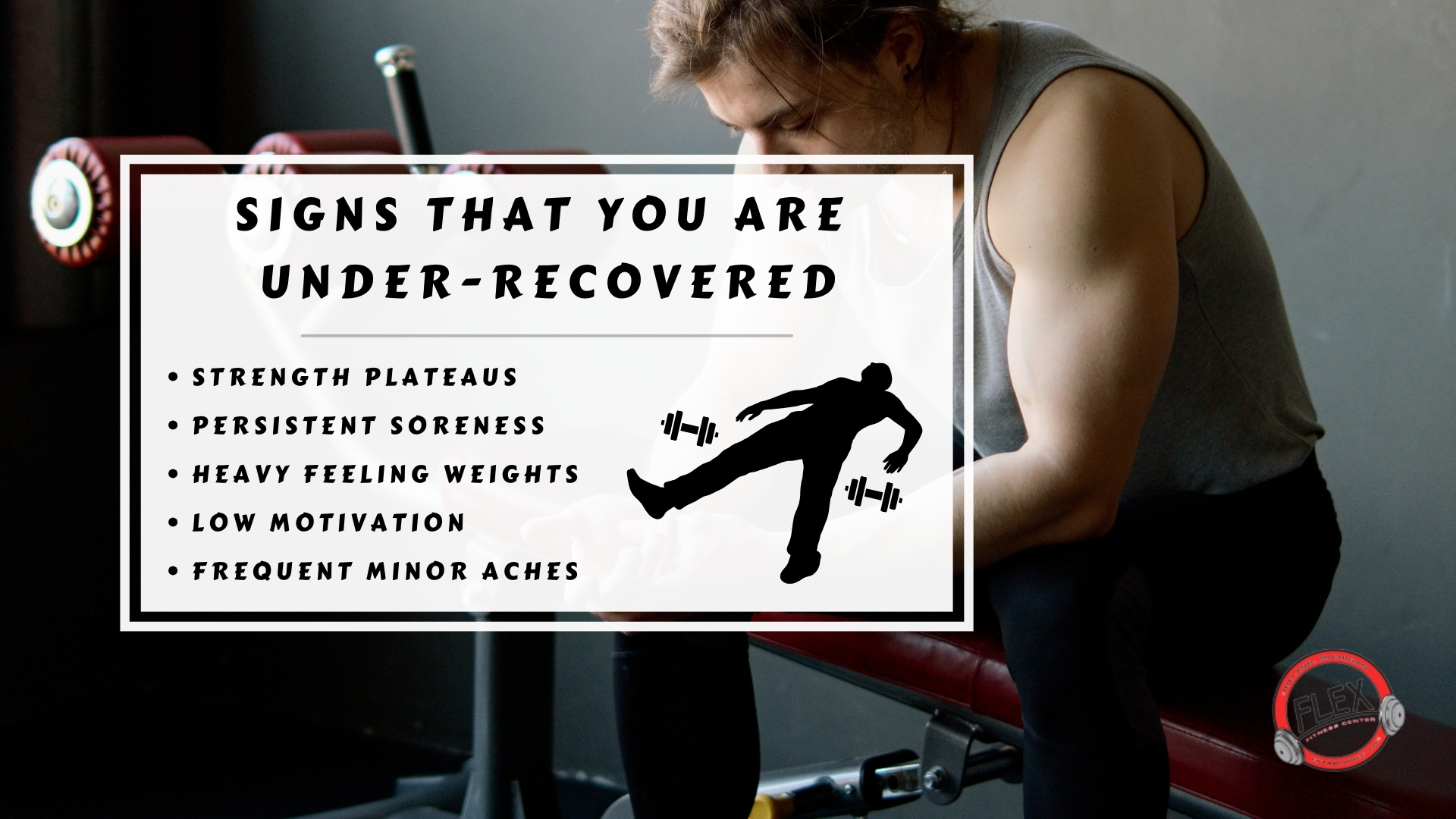
Signs That You Are Under-Recovered
Poor sleep often shows up in your workouts long before you realize it. Here are the common signs that your lack of recovery is holding back your strength gains:
-
- Strength Plateaus
If your lifts stop improving despite consistent training and effort, recovery might be the issue. When sleep is poor, your nervous system cannot fully recharge, limiting strength gains.
-
- Persistent Soreness
Muscle soreness that lingers for days is a sign your body is not repairing tissue efficiently. Quality sleep shortens recovery time and reduces excessive soreness.
-
- Heavy Feeling Weights
When warm-up sets feel unusually difficult, it often points to nervous system fatigue. Poor sleep reduces coordination and force output, making even moderate loads feel heavy.
-
- Low Motivation
Chronic sleep loss affects mood and drive. If you dread workouts you normally enjoy, your body might be signaling that it needs more recovery, not more intensity.
-
- Frequent Minor Aches
Joint pain and small strains can increase when sleep is lacking. Fatigue affects movement quality, increasing stress on joints and connective tissue.
Improving Sleep Quality for Better Muscle Growth
Sleep duration matters, but sleep consistency matters even more. Going to bed and waking up at the same time each day helps regulate your internal clock, making it easier to fall into deep, restorative sleep. Late-day caffeine, excessive screen time, and hard training sessions close to bedtime can all interfere with sleep quality. If you train at night, keeping sessions shorter and less intense can help your body wind down.
A recovery-focused nighttime routine can further improve sleep quality. Dimming lights, reducing screen exposure, and following a predictable wind-down schedule can signal your body that it’s time to rest. Moreover, supplements, such as RAW Sleep and GAT ZMAG-T, can support better sleep when used correctly. When paired with smart recovery habits, these products help create the ideal environment for sleep muscle growth.
Train Smarter With Flex Fitness
Flex Fitness Center promotes a holistic approach to fitness that emphasizes proper sleep, recovery, and nutrition alongside intense, focused training. Built for fitness and transformation, our premier gym offers a wide range of supplements from reputable brands, including options that promote relaxation, recovery, and quality sleep to help you perform at your best every session. Visit us today or contact us at (616) 396-2901 or here to learn more about our membership options, supplement selections, and personalized training support.