15 Dec How to Train Around Joint Pain Without Losing Strength
Joint pain can be frustrating when you’re trying to stay consistent with your workouts. Dealing with discomfort in your knees, shoulders, elbows, or hips can make training feel harder than it should. But joint pain doesn’t always mean you need to stop exercising altogether. With the right strategy, you can stay active, build strength, and even help your joints recover, especially when you work with a qualified personal trainer in Holland, Michigan, who knows how to guide you through movements safely.
- Understanding the Source of Joint Pain
- Smart Modifications to Continue Training Safely
- Recovery Techniques That Improve Joint Health
- Train Smarter With Flex Fitness
Let’s explore how you can train through joint pain discomfort without losing progress, helping you stay committed to your fitness goals while protecting your long-term health.
Understanding the Source of Joint Pain
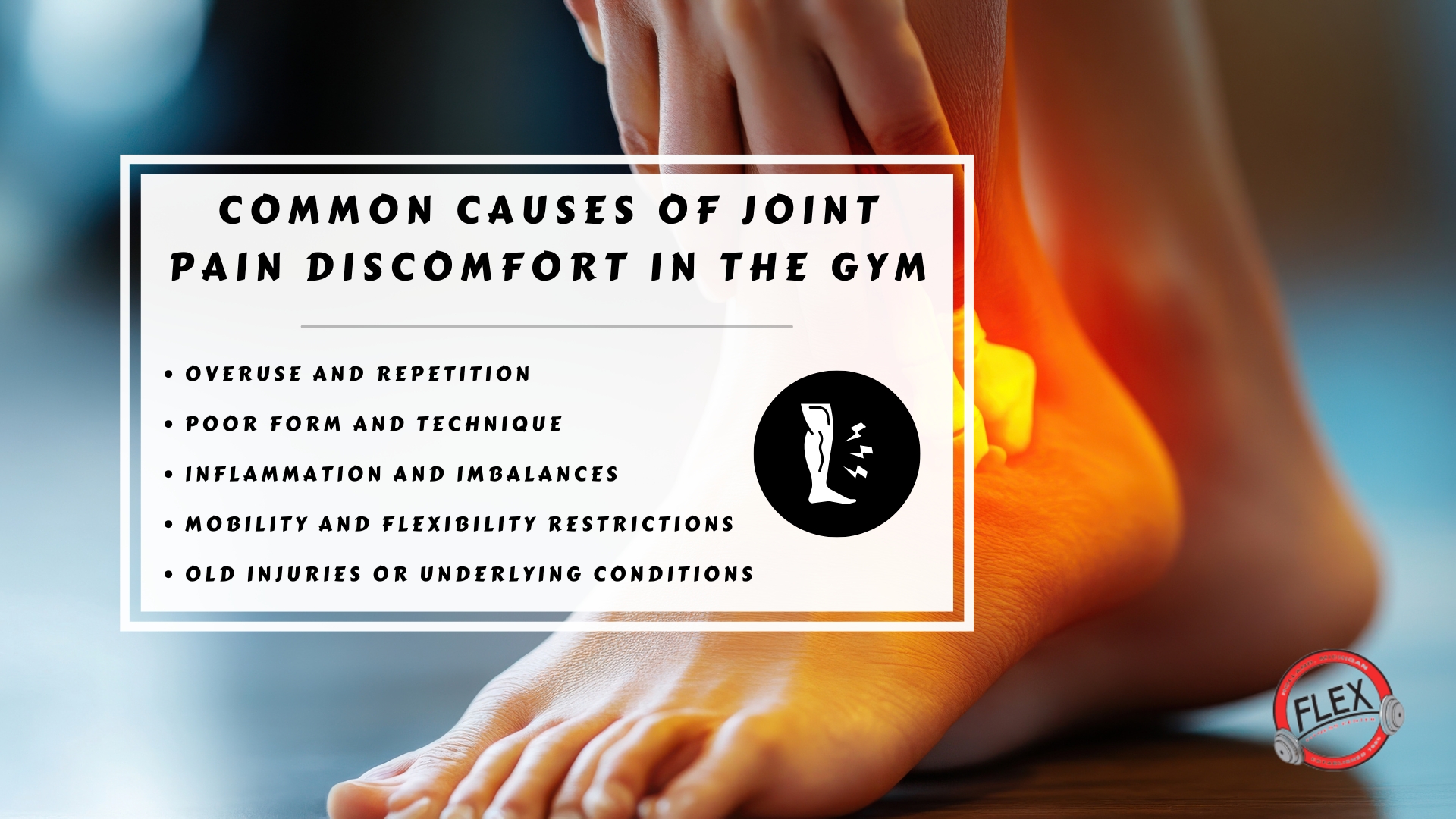
Before you start modifying your workouts, it’s essential to understand why your joints hurt. Weight training joint pain isn’t always a sign of something serious, but ignoring it can turn a minor issue into a serious injury or long-term limitations. Here are some of the most common causes of joint discomfort in the gym:
-
- Overuse and Repetition
Repeating the same exercises or movement patterns without enough recovery time can cause wear and tear on your joints. For example, performing heavy lifts multiple times per week can strain connective tissues. Overuse injuries often sneak up slowly, starting as mild soreness and developing into persistent pain.
-
- Poor Form and Technique
Even the best exercises can become harmful when done incorrectly. Misaligned joints, rounded backs, or improper bracing during lifts place uneven stress on cartilage and ligaments. For instance, letting your knees cave inward during squats or arching your lower back during presses can lead to discomfort in the long run.
-
- Inflammation and Imbalances
Inflammation from microtears in the muscles or tendons is a normal part of training, but chronic inflammation isn’t. That often happens when one muscle group is much stronger than its opposing group, such as overdeveloped quads and weak hamstrings. These imbalances cause uneven tension across the joints.
-
- Mobility and Flexibility Restrictions
Limited joint mobility can make it difficult to move through full ranges of motion safely. Tight hips, ankles, or shoulders often force the body to compensate with poor mechanics, which increases stress on nearby joints. Regular stretching, mobility drills, and dynamic warmups can go a long way toward preventing that.
-
- Old Injuries or Underlying Conditions
Sometimes, pain lingers from past injuries, such as sprains or tendonitis. The affected areas might not have fully healed or regained their strength, making them more vulnerable to reinjury. In other cases, underlying issues, including arthritis or bursitis, might contribute to the joint discomfort during your workouts.
Muscle fatigue, light soreness, or mild stiffness after a workout is normal and usually means your muscles are adapting to new stress. However, if you feel sharp pain, sudden swelling, clicking, or discomfort that worsens during a lift, stop the movement immediately. These are warning signs that something isn’t right. Seek guidance from a medical professional or a personal trainer in Holland, Michigan, who can reassess and adjust your program.
Smart Modifications to Continue Training Safely
Joint pain doesn’t have to sideline you completely. With thoughtful modifications, you can stay consistent and even continue building strength while protecting your joints. The goal is to find ways to train smarter, not necessarily harder.
Switch to Pain-Free Ranges of Motion
If a movement causes pain at a certain point, try shortening the range of motion or using variations that feel better. For example, do a floor press instead of a full bench press. That allows you to continue strengthening your muscles without irritating the joint. As your mobility and comfort improve, you can gradually increase the range again.
Use Tempo Control and Lighter Loads
Slowing down your repetitions reduces stress on the joints and increases muscle control. If you emphasize the eccentric phase of a lift, you can maintain tension and promote strength gains even with lighter weights. Such a technique further helps refine your form and prevent jerky, uncontrolled movements that can aggravate joint pain.
Substitute Alternative Movements
If certain exercises consistently cause discomfort, swap them for joint-friendly alternatives. For instance, replace barbell squats with goblet squats, or trade standard push-ups for incline push-ups. Machines, such as leg presses or cable systems, can reduce joint strain by stabilizing the movement and controlling load distribution.
Prioritize Compound Lifts with Proper Bracing
Compound lifts, including squats, deadlifts, and presses, build strength efficiently, but require solid technique. Proper bracing through your core helps distribute pressure evenly and supports the joints involved. Focus on maintaining neutral alignment, engaging your core before each lift, and avoiding momentum-driven movements.
Incorporate Mobility and Activation Work
Joint-friendly training doesn’t stop with the main lifts. Adding dynamic warmups, foam rolling, and targeted activation drills helps prepare the body for movement and improves joint stability. Glute activation before lower-body workouts can reduce stress on the knees, while shoulder mobility exercises can enhance pressing comfort.
Autoregulate Your Training Program
Autoregulation, such as using the Reps in Reserve (RIR) method, helps you train based on how your body feels rather than pushing for a specific number on the bar. If your target set feels too painful or heavier than expected, stop a few reps short. Listening to your body prevents joint irritation and ensures sustainable long-term progress.
Recovery Techniques That Improve Joint Health
Training smart is only half the equation. Recovery is where your body actually grows stronger and more resilient. Even the best training adjustments won’t help much if your recovery habits fall short. Joint health depends heavily on what you do outside the gym, not just what happens during your workouts. The right recovery strategies can reduce discomfort, improve mobility, and help you come back stronger.
Sleep and Hydration
During deep sleep, your body releases growth hormones that repair muscles, ligaments, and tendons. Aim for at least seven to nine hours each night to support consistent progress. Hydration is equally important. Joint cartilage is primarily made of water, and dehydration can make your joints feel stiff and achy. Make sure you’re drinking enough fluids throughout the day, especially before and after training sessions.
Nutrition and Supplementation
Anti-inflammatory nutrients, such as leafy greens, berries, turmeric, and ginger, help reduce joint irritation. Supplements can further support joint health when used properly. Popular options include omega-3 fatty acids, collagen peptides, and glucosamine-chondroitin. Always consult a healthcare professional before starting new supplements, especially if you have existing joint conditions or take other medications.
Train Smarter With Flex Fitness
Don’t let weight training joint pain stop your progress. Let Flex Fitness Center provide the support, guidance, and tools you need to train smarter. Our experienced personal trainers in Holland, Michigan, can adjust your program and teach you techniques that reduce joint stress while maximizing results. We offer high-quality supplements from reputable brands to support your recovery and help your body perform at its best. Visit us today or contact us at (616) 396-2901 or here to learn more about our personal training programs and fitness support.