30 Sep Overtraining vs. Under-Recovery: What’s Stopping Your Gains
Have you experienced pushing yourself too hard in the gym but not seeing the results you expected? Many people chasing fitness goals fall into a trap of either training too hard for too long or not giving their bodies enough time and resources to recover properly. The result? Plateaued progress, nagging injuries, and constant fatigue. Let’s explore how overtraining and under-recovery might be holding you back, and what you can do about it.
- What Is Overtraining?
- What Is Under-Recovery?
- Overtraining vs. Under-Recovery: Key Differences
- How to Find the Right Balance for Maximum Gains
- Why Flex Fitness Can Help You Train Smarter
What Is Overtraining?
Overtraining happens when the physical stress from your workouts exceeds the ability of your body to recover and adapt. It’s usually caused by a combination of high training volume, high intensity, and not enough rest between sessions. If you’re constantly chasing personal records, heavy lifting day after day, or skipping rest days because you’re afraid to lose progress, you could be setting yourself up for burnout.
When you fall into overtraining, your body starts sending warning signals. You might feel constant fatigue that doesn’t improve with rest, or notice your performance in the gym dropping instead of improving. No matter how much effort you put in, the progress just isn’t there. Sleep might become restless, and your motivation can dip. Worst of all, your risk of injury climbs because your body isn’t able to repair itself between sessions.
What Is Under-Recovery?
Under-recovery means your body doesn’t have the tools it needs to rebuild after a workout. Even if your training plan is well-structured, poor recovery habits can make you feel stuck, tired, and unmotivated. If you’re eating poorly, sleeping only a few hours a night, or skipping recovery practices, you might find yourself under-recovered.
Common causes include not fueling your body with enough protein and carbs, ignoring the importance of 7 to 9 hours of sleep, dealing with chronic stress, or never giving yourself structured time to rest. Skipping deload weeks, where you reduce volume and intensity to let your body adapt, is another mistake that can lead to prolonged fatigue.
Overtraining vs. Under-Recovery: Key Differences
It’s easy to confuse overtraining with under-recovery because the symptoms often look the same. But the root causes are very different. Overtraining is about doing too much, while under-recovery is about not giving your body enough support to adapt and grow. Here’s a simple comparison to help you see the difference:
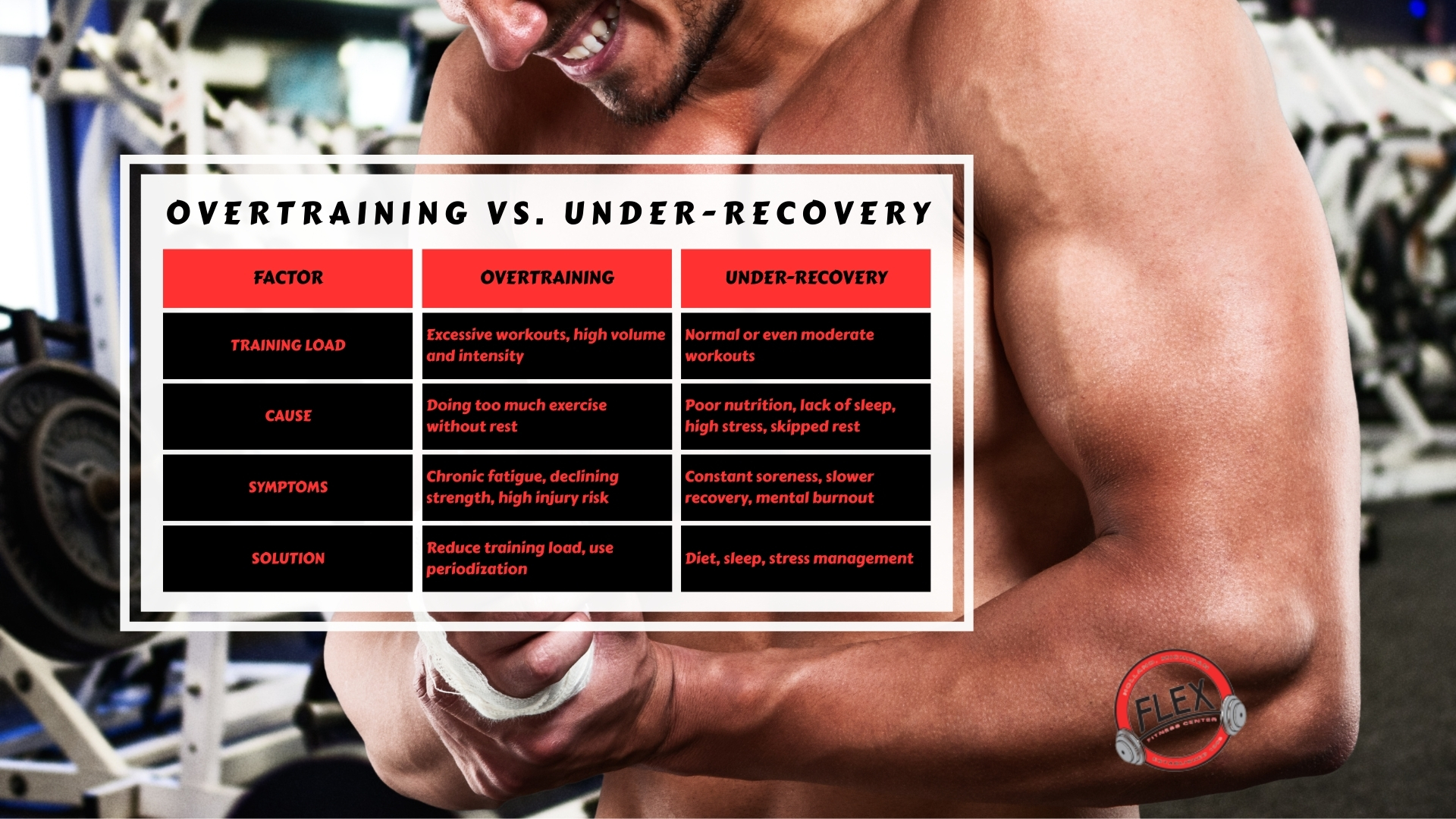
| Factor | Overtraining | Under-Recovery |
| Training Load | Excessive workouts, high volume and intensity | Normal or even moderate workouts |
| Cause | Doing too much exercise without rest | Poor nutrition, lack of sleep, high stress, skipped rest |
| Symptoms | Chronic fatigue, declining strength, high injury risk | Constant soreness, slower recovery, mental burnout |
| Solution | Reduce training load, use periodization | Diet, sleep, stress management |
Unlike overtraining, which is relatively rare, especially among casual lifters, under-recovery is much more common. Many lifters assume overtraining when their lifts stall. In reality, those lifters might not be getting enough sleep, skipping meals, or training without rest days. That’s under-recovery, not true overtraining.
Let’s say, for example, you’ve been training hard at a certain weight lifting gym in Holland, Michigan, hitting squats, deadlifts, and push days five to six times a week. One day, you start feeling tired all the time, your lifts stall, and your joints ache. But you admit that you’re getting just five hours of sleep every night, plus you’ve been skipping meals to rush to work. In that case, your training wasn’t the problem, your recovery was.
How to Find the Right Balance for Maximum Gains
So how do you keep pushing yourself without hitting a wall? The answer lies in a balanced workout—training hard while making recovery a serious part of your routine.
-
- Recovery Protocols
Build rest into your schedule as intentionally as workouts. Foam rolling, stretching, mobility work, and even light cardio on off days can all help your muscles recover faster.
-
- Periodization
Instead of going hard every day, cycle your training volume and intensity. Periodization means alternating heavy, moderate, and light weeks, along with occasional deload weeks.
-
- Sleep Hygiene
Aim for 7 to 9 hours of sleep each night. Create a routine. Shut off screens before bed, keep your room cool and dark, and try to stick to the same sleep schedule daily.
-
- Proper Nutrition
Fueling your body properly ensures you’re ready for your next session. A diet rich in protein, complex carbs, and healthy fats supports muscle repair and energy.
-
- Supplement Support
Supplements, such as casein or whey protein, creatine, or omega-3s, can fill gaps in your diet and support recovery, but should complement, not replace, whole foods.
Balance hard training with smart recovery and find that sweet spot where progress feels steady and sustainable. Instead of asking whether you’re training too much, ask whether you’re recovering enough.
Why Flex Fitness Can Help You Train Smarter
Struggling to balance intense training with proper recovery? Flex Fitness Center is here to guide your progress. At our weight lifting gym in Holland, Michigan, you get access to certified personal trainers who can help you recognize early signs of overtraining and adjust your program so you keep pushing hard while still giving your body the recovery it needs.
With our wide range of supplements available, you can fuel your body to perform at your peak, whether that’s protein for muscle repair, pre-workout for energy, or other essentials that keep you performing at your best. Pair that with our top-notch equipment and supportive community, and you have everything you need to train smarter, not just harder.
If you’re serious about breaking past plateaus and want to avoid the trap of overtraining vs. under-recovery, it’s time to take your training environment seriously. Visit us today to optimize your training, sustain your progress, and get the support you need to recover right. For inquiries, don’t hesitate to contact us at (616) 396-2901 or here.