28 Feb Strength Training in Your 30s and 40s: What Must Change
If you’re in your 30s or 40s, you’ve probably noticed that your body doesn’t respond the same way it did in your early 20s. Workouts that once felt easy now take more effort. Recovery takes longer. Small aches can linger, and you might even wonder if you should train as hard as you used to. But the good news is that you can still build muscle, gain strength, and improve your fitness.
- How Strength Adaptation Changes With Age
- Volume, Intensity, and Recovery Adjustments
- Injury Risk and Joint Health Considerations
- Lifestyle Factors That Impact Strength Progress
- Train Smarter With Flex Fitness
In fact, strength training in your 30s and strength training in your 40s can be some of the most productive years of your life. But what must change is how you approach it. Instead of pushing harder, you need a smarter plan. That means adjusting your volume, managing intensity, and respecting recovery, perhaps with the guidance of a qualified personal trainer in Holland, Michigan.
Let’s explore how strength adaptation changes with age and what you should do differently to keep making progress.
How Strength Adaptation Changes With Age
In your 20s, your recovery capacity is usually high, and you can train hard, recover quickly, and often get away with inconsistent sleep or nutrition. Hormones are generally at peak levels, which supports muscle growth and faster repair. By the time you reach your 30s and 40s, recovery slows down, and you might notice more soreness, longer recovery between sessions, and a greater impact from stress, poor sleep, or a busy schedule.
But that doesn’t mean progress stops. The body can still adapt, but it needs more time and better support to do so. Strength training in your 30s and strength training in your 40s require more structure. When your workouts are well-programmed, with planned progression and recovery, you can continue building muscle and increasing strength. Adaptation is possible, but it depends more on consistency, proper loading, and recovery than it did in your 20s.
Volume, Intensity, and Recovery Adjustments
High-volume training can be hard to sustain as you get into your 30s and 40s. In your 20s, you might handle five or six intense training days per week without major issues. In your 30s and 40s, that same workload can lead to nagging injuries, joint pain, or constant fatigue, and your joints and connective tissues might not tolerate endless volume the same way. If you keep pushing high volume without adjusting, you might find yourself stalled or burned out.
Managing intensity becomes even more important. Constantly training at very high intensity can drain your nervous system and lead to chronic fatigue. Instead, focus on controlled progression, quality reps, and planned recovery days. Deload periods help your body reset and come back stronger. If you’re unsure how to structure that, a qualified personal trainer in Holland, Michigan, can help you tailor your training to your current age and recovery ability.
Injury Risk and Joint Health Considerations
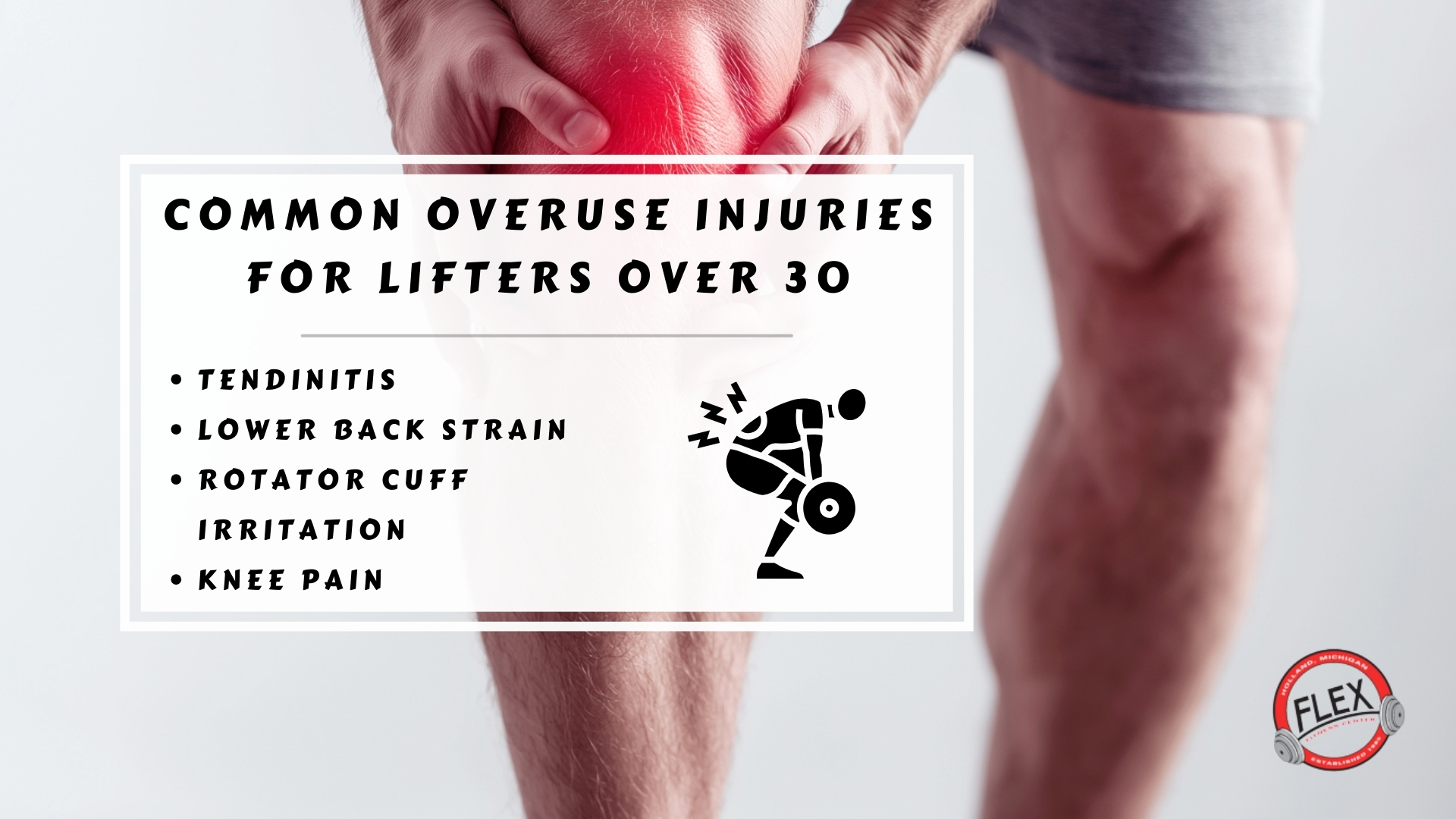
As you move into your 30s and 40s, injury risk tends to increase, not because you’re weak, but because recovery slows and small issues can build up over time. Here are some of the most common overuse injuries seen in lifters over 30:
-
- Tendinitis
Tendinitis happens when a tendon becomes irritated from repeated stress, and you might feel it in your shoulders from pressing or your knees from squats and lunges. In your 20s, you might have pushed through mild discomfort. In your 30s and 40s, that same approach can turn into a long-term problem.
-
- Lower Back Strain
Deadlifts, squats, and even long hours of sitting can stress your lower back. If your technique is lacking, strain becomes more likely. Recovery from back issues often takes longer as you age, so proper form and smart loading matter more than ever.
-
- Rotator Cuff Irritation
The shoulder joint is mobile, making it vulnerable. Repeated pressing without balancing pulling exercises or without proper warm-ups can lead to pain and reduced range of motion. Over time, that can limit your ability to train effectively.
-
- Knee Pain
High training volume combined with tight hips or weak glutes can lead to knee discomfort. It’s common during strength training in your 30s and strength training in your 40s, when recovery between sessions is not as fast as it once was.
That’s why warm-ups matter more as you age, and you can’t afford to skip straight to heavy sets. A focused warm-up increases blood flow, prepares your joints, activates key muscles, and helps you practice good movement before the heavy work starts.
Lifestyle Factors That Impact Strength Progress
In your 20s, you might have been able to out-train poor sleep or high stress. In your 30s and 40s, that becomes much harder. Work demands increase. Family responsibilities grow. Sleep might become inconsistent. All of these factors affect recovery and energy levels. If you’re not sleeping well or managing stress, your progress in the gym slows down, no matter how hard you train. Nutrition becomes even more essential. Adequate protein intake helps preserve muscle mass, and supplements such as creatine and vitamin D can support strength and recovery when used appropriately.
Most importantly, consistency becomes more valuable than intensity. Instead of crushing yourself with extreme workouts, focus on showing up week after week. Three or four well-structured sessions done consistently produce better long-term results than occasional all-out efforts followed by burnout. An experienced personal trainer in Holland, Michigan, can design a plan that fits your lifestyle and schedule. Consistent work, paired with smart recovery habits, is what keeps you getting stronger year after year.
Train Smarter With Flex Fitness
As you move through your 30s and 40s, your training needs to evolve, and you can’t rely on the same approach you used in your 20s. If you need guidance, Flex Fitness Center can point you in the right direction. Our personal trainers in Holland, Michigan, can help you fine-tune your workouts and build a plan that aligns with your schedule and goals. We offer supplements from reputable brands to support your progress. Visit us today or contact us at (616) 396-2901 or here for any questions about memberships, personal training, or supplements.