31 Aug Pump Supplements Explained: Citrulline, Nitrates, Arginine, and Glycerol
A muscle pump is a noticeable effect of a hard strength training session. As you perform repeated contractions, blood flow to the working muscles increases, making them temporarily look and feel fuller. While that effect naturally occurs during exercise, certain supplements are formulated to support blood flow, nitric oxide production, hydration, training performance, or a combination of these factors so you can get more out of your workouts.
- What Pump Supplements Are Designed to Do
- How Citrulline Supports Blood Flow
- How Nitrates, Arginine, and Glycerol Differ
- Choosing the Right Pump Supplement for Your Training
Unlike stimulant-heavy pre-workouts that mainly focus on energy and alertness, pump formulas often rely on ingredients such as citrulline, nitrates, arginine, and glycerol. These ingredients do not all work the same way, and results can vary with dose, training style, diet, and individual response. Let’s explore how pump supplements work, what the most common ingredients do, and how you can choose an option that matches your training routine.
What Pump Supplements Are Designed to Do
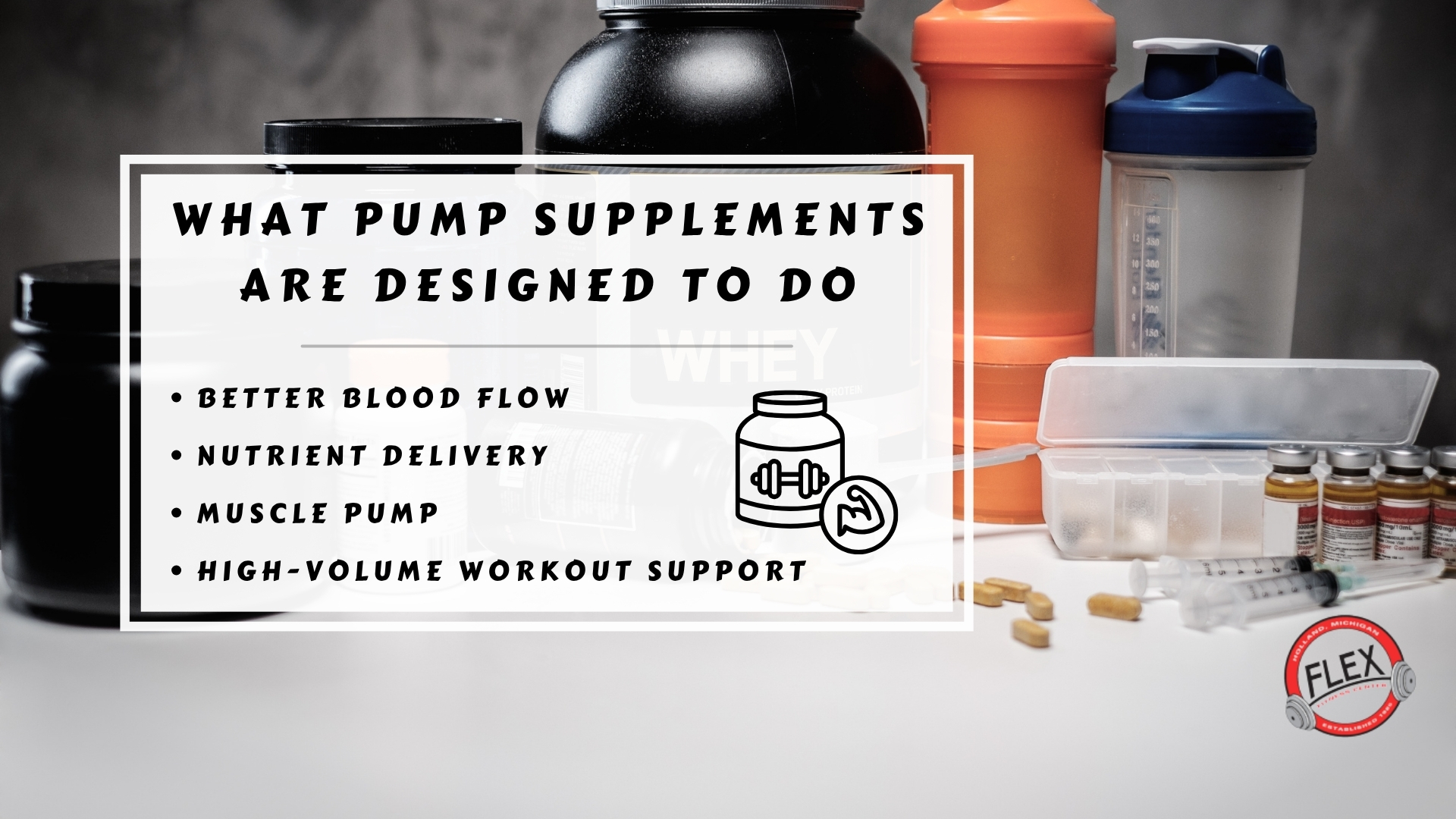
Pump supplements generally focus on blood flow, hydration, and your ability to handle demanding training sessions. Depending on the formula, several ingredients might work through different mechanisms to support the same training goal.
Better Blood Flow
Many pump ingredients are intended to support blood flow to the muscles being trained. Citrulline, arginine, and nitrates are commonly used for that purpose, as these ingredients can increase nitric oxide availability. Nitric oxide helps blood vessels relax and widen, a process known as vasodilation. When blood vessels expand, blood can move more easily through them. During exercise, that can support circulation to muscles that are working hard through repeated contractions.
Nutrient Delivery
Blood carries oxygen and nutrients throughout your body, including to your working muscles. Pump supplements can create favorable conditions for delivering these substances while you train. However, supplements are only one part of the picture. Diet, hydration, sleep quality, and training habits still matter far more than any individual pump ingredient. Taking a supplement cannot compensate for going into a demanding workout dehydrated or poorly fueled.
Muscle Pump
The visible and physical feeling of a “pump” you experience during resistance exercise comes partly from increased blood flow and fluid movement into the working tissues. Pump-focused ingredients might enhance these conditions, making the effect more noticeable for some people. Note that the size of the pump is not a direct measurement of muscle growth, but it can help some lifters keep a stronger mind-muscle connection during workouts.
High-Volume Workout Support
High-volume workouts can involve several exercises, repeated sets, and moderate-to-high repetition ranges. Specific ingredients used in pump formulas can help support repeated-set performance or muscular endurance. That does not mean you can suddenly add large amounts of weight to the bar. The potential benefit might be noticeable when you are trying to maintain quality across challenging sets, and the effect varies by ingredient and person.
How Citrulline Supports Blood Flow
L-citrulline is an amino acid that your body converts into arginine. Arginine can then be used to produce nitric oxide. Interestingly, taking citrulline can raise blood arginine levels more efficiently than consuming arginine itself because citrulline undergoes less breakdown before reaching the bloodstream. That’s why L-citrulline has become a widely used ingredient in pump-focused pre-workouts.
When comparing products, you often see either pure L-citrulline or citrulline malate. L-citrulline provides the amino acid by itself, while citrulline malate combines citrulline with malic acid. Because the total amount of citrulline might differ, it’s best to read the serving information instead of assuming two supplements provide the same amount simply because both list citrulline on the label.
How Nitrates, Arginine, and Glycerol Differ
Although nitrates, arginine, and glycerol can all appear in the same pump formula, these ingredients do not perform identical jobs. Looking at each ingredient separately makes it easier to understand why manufacturers sometimes combine them.
Nitrate
After you consume nitrate, your body can eventually convert it into nitric oxide through the nitrate-nitrite-nitric oxide pathway. Beetroot is a well-known dietary nitrate source, while concentrated nitrate ingredients often appear in sports supplements. Nitrate supplementation might improve some measures of exercise capacity, muscular endurance, and high-intensity performance, although results vary with the activity, dose, and training status.
Arginine
Arginine is directly involved in nitric oxide production. However, oral arginine is extensively metabolized before it can reach the bloodstream, and that can limit how effectively it raises circulating arginine compared with citrulline. Research on arginine supplements for exercise performance has been inconsistent, with many studies showing little to no effect on nitric oxide concentration, blood flow, strength, or endurance.
Glycerol
Glycerol works differently because its main role in a pump formula is related to fluid balance rather than nitric oxide. When consumed with enough water, glycerol can help your body retain fluid, which can support hydration and increase the amount of water available in body tissues. In a strength training setting, that can contribute to a fuller muscle feel and might be useful during long or sweaty workout sessions.
Combined Formulas
Pump ingredients are often combined to target different parts of the training experience. Bucked Up, for example, contains citrulline malate along with caffeine, making it an option for someone who wants both stimulation and pump support. Gorilla Mode Nitric, on the other hand, is a stimulant-free formula that combines L-citrulline, sodium nitrate, glycerol, electrolytes, creatine, betaine, and other training-focused ingredients.
Choosing the Right Pump Supplement for Your Training
The best choice often depends on your training routine. If your workout sessions involve bodybuilding-style training, supersets, moderate-to-high repetitions, or a large amount of training volume, a pump-focused formula might fit your routine well. A stimulant-free product might be more practical if you train at night or simply prefer to limit your caffeine intake. But always remember that supplements should only support a well-planned workout, not replace good nutrition, hydration, and consistency.
If you are looking for a weightlifting gym in Holland where you can train and find supplements that support your routine, visit Flex Fitness Center. We offer a wide range of supplements from established fitness brands, along with a gym environment built for serious resistance training. Stop by our gym today or contact us at (616) 396-2901 or here if you have questions about our membership options or available products. We can help you find a supplement option that best matches the way you train.