15 Oct Protein Bars vs. Protein Shakes: Which Is Better for Your Daily Protein Goal?
Getting enough protein each day is essential when you’re trying to build muscle and recover from workouts. However, meeting your daily protein goal isn’t always easy, especially when you have a busy schedule or limited time to prepare meals. Even after balanced meals, you might still fall short. Protein bars and protein shakes offer simple ways to fill that gap. But which one should you choose? While both provide an additional source of protein, these supplements offer different benefits depending on your nutritional needs and fitness goals. Let’s explore the differences between protein bars vs. protein shakes, when each option makes sense, and how to choose the right protein supplement for your needs.
- Understanding the Difference Between Protein Bars and Protein Shakes
- Nutritional Differences That Actually Matter
- When Protein Bars May Be the Better Choice
- When Protein Shakes May Be More Effective
- Choosing the Right Protein Supplement at Flex Fitness
Understanding the Difference Between Protein Bars and Protein Shakes
Protein bars and protein shakes are dietary supplements designed to help you increase your protein intake alongside regular meals. Many protein supplements contain whey or casein, two milk-derived proteins that provide essential amino acids necessary for muscle repair and growth. For most healthy adults, the Recommended Dietary Allowance (RDA) is 0.8 grams of protein per kilogram of body weight each day. However, people who exercise regularly might benefit from approximately 1.4 to 2.0 grams per kilogram of body weight daily. Both protein bars and shakes can help you meet these targets, but their ingredients, serving sizes, and nutritional composition can differ considerably.
Nutritional Differences That Actually Matter
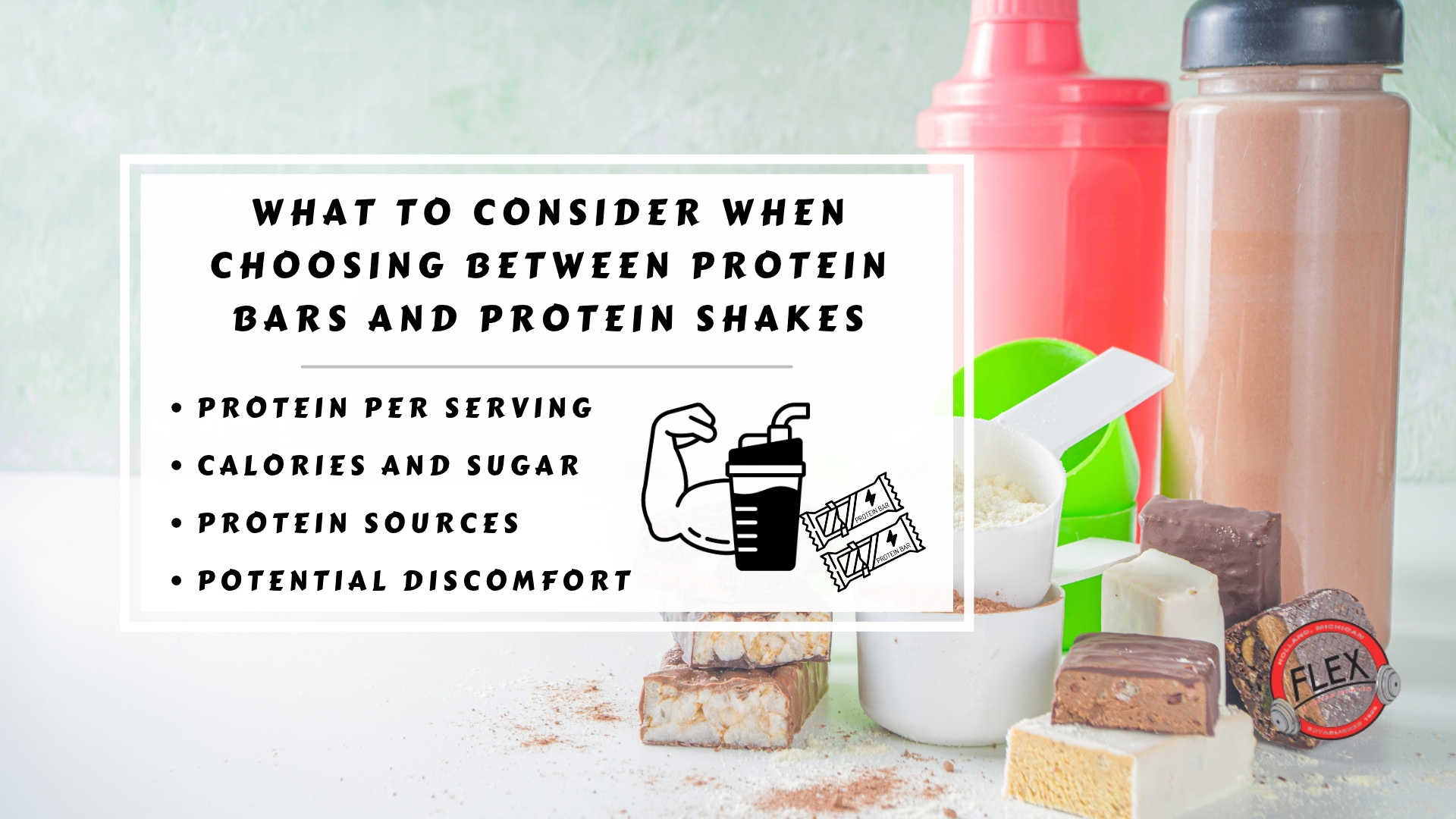
When you compare protein bars vs. protein shakes, look beyond the amount of protein advertised on the package. Each product contains different nutrients that can affect your calorie intake and overall diet.
Protein Per Serving
Many protein bars provide roughly 10 to 20 grams of protein. Protein shakes, on the other hand, supply around 20 to 30 grams of protein per serving, depending on the powder or ready-to-drink formula. Research suggests that consuming approximately 20 to 40 grams of high-quality protein per serving can support muscle protein synthesis, depending on your body weight and other factors. Amounts can vary by product, so always check the actual protein content.
Calories and Sugar
A protein bar often includes oats, nuts, chocolate coatings, oils, or added sugars to create its texture and flavor. These ingredients can increase its calories, carbohydrates, and fat content. That’s not necessarily bad, especially if you need extra energy to support your activity level. Meanwhile, a protein powder mixed with water usually provides protein with relatively few additional calories. When you’re managing your weight, compare protein grams alongside calories per serving.
Protein Sources
Whey and casein are complete proteins containing all nine essential amino acids. Whey is particularly rich in leucine, an amino acid involved in stimulating muscle protein synthesis. Some protein bars use whey, soy, or milk protein, while others contain collagen or plant-based protein blends. Similarly, protein shakes might use whey isolate, whey concentrate, casein, soy, or pea protein. Check labels for allergens and choose a product you can comfortably include in your routine.
Potential Discomfort
Protein bars often have added fiber that can help support digestion and make a snack more satisfying, although consuming too much fiber might cause bloating. In addition, many bars contain sugar alcohols, including maltitol or sorbitol, to add sweetness. Certain sugar alcohols can cause digestive discomfort, including abdominal gas and diarrhea in sensitive people. So, pay attention to how your body responds before making any protein supplement part of your daily routine.
When Protein Bars May Be the Better Choice
Protein bars make sense when you need a convenient snack during workdays or other activities that leave little time for meal preparation, and you can keep one in your bag without worrying about mixing ingredients or carrying a shaker bottle. A bar can be helpful when lunch and dinner are several hours apart because it can help you manage your hunger. In fact, a study found that a solid high-protein meal suppressed hunger more effectively than a similar liquefied meal. If you’re physically active and need additional calories, a bar can provide both protein and energy in one serving. However, protein bars should not replace balanced meals, and their nutritional value varies between products.
When Protein Shakes May Be More Effective
Protein shakes might be the better option when you want to increase your protein intake without significantly raising your daily calorie consumption. For example, mixing protein powder with water can provide a substantial amount of protein without the additional fats and carbohydrates commonly found in bars. Moreover, a shake can be convenient after strength training, especially when you’re not ready to eat a full meal. Protein supplementation supports muscle recovery following resistance exercise, but you don’t necessarily need to drink a shake immediately after your final set. If your next meal is still hours away, a shake can help bridge that gap while you continue with your day.
Depending on your routine, you can choose between ready-to-drink protein shakes and powdered supplements. Ready-to-drink shakes are convenient because these products require no preparation. However, protein powders can be more cost-efficient per serving, particularly when purchased in larger containers and used regularly, and allow you to adjust your serving size based on your nutritional needs. Gorilla Mode Protein, for example, provides 25 grams of protein per serving from a blend of whey isolate and whey concentrate. Its formula is uniquely formulated with lactase, an enzyme that helps break down lactose and might support easier digestion for some individuals.
Choosing the Right Protein Supplement at Flex Fitness
There is no universal winner in the protein bars vs. protein shakes comparison. The better choice is the one that fills a real gap in your diet and works with your schedule. Determine how much protein you get from meals, then decide what your supplement needs to contribute. Compare protein content, total calories, ingredient lists, added sugars, and cost per serving. Consider your appetite and digestion, too. But remember, neither needs to replace balanced meals, regular exercise, quality sleep, and a realistic fitness plan.
Flex Fitness Center can help you make informed decisions about the supplements you use while working toward your fitness goals. Our premier gym provides the equipment and training environment to support your progress, while our online nutrition supplement store in Holland offers protein powders and other workout supplements to help you meet your nutritional needs. Visit us today, or contact us at (616) 396-2901 or here to learn more about our gym, membership options, and available protein supplements.