27 Nov Signs You’re Lifting Too Heavy and Overtraining Symptoms (and How to Fix It Without Losing Progress)
When you’re serious about fitness, it’s easy to believe that lifting heavy and training longer are the fastest routes to progress. Many lifters push harder, add more weight, and try to outdo their last workout. But at a certain point, more isn’t always better. Lifting too heavy or overtraining can backfire, often leading to fatigue, injuries, and even stalled results. What’s meant to make you stronger might end up setting you back.
- How to Know When You’re Lifting Too Heavy
- Overtraining Symptoms to Watch For
- Why Overtraining Slows Your Gains
- How to Recover Without Losing Progress
- Train Smarter with Flex Fitness
Let’s explore how to tell when you’re lifting too heavy, the warning signs of overtraining, and what you can do to fix these issues without losing the gains you’ve worked so hard for.
How to Know When You’re Lifting Too Heavy
Pushing your limits is part of getting stronger, but there’s a big difference between challenging your muscles and exceeding what your body can safely handle. Healthy strength training is progressive; you increase the load little by little, giving your muscles enough stimulus to grow while still allowing proper recovery. Lifting too heavy too soon disrupts that balance and sets you up for pain rather than progress.
Proper training should make you feel challenged but still in control, and you should be able to complete your sets with good posture and a full range of motion. If you find yourself struggling to maintain form, if every movement feels shaky, or if you’re holding your breath just to get through a lift, these are clear indicators that the weight might be too much. Strength gains come from consistency and good form, not from battling with a barbell on the edge of failure every session.
Ego lifting, or trying to lift more weight just to prove something to yourself and others, is a quick path to plateaus, or worse, long-term injuries. When the weight is too heavy, your body compensates with poor mechanics. Instead of targeting the muscles you want to strengthen, you shift the strain to joints, tendons, and smaller stabilizers that aren’t meant to take that load, and that can lead to shoulder tweaks, lower back strain, or knee irritation that keeps you out of the gym entirely.
Overtraining Symptoms to Watch For
Even if your form is solid, working out too often or too intensely can still cause setbacks. Overtraining happens when your body doesn’t have enough time to recover between workouts. It doesn’t matter if you’re lifting heavy, doing endurance training, or both; your body needs time to rebuild after hard sessions. When you ignore those needs, overtraining symptoms start to show up, more common than many lifters realize.
Physical signs include persistent muscle soreness that doesn’t go away after a couple of days, and you might notice tight, achy joints or recurring pain in places that used to feel fine. Performance drops, and the weights that used to feel manageable suddenly feel heavier. Moreover, your nervous system stays on high alert, making it harder to fall asleep or stay asleep. Even if you do get rest, you might still feel drained the next day.
Beyond the physical side, you might feel unusually irritable, unmotivated, or mentally foggy before your workouts. Many people mistake these for laziness, but it’s actually your body’s way of saying it needs a break. Plus, hormonal imbalance can occur when you constantly overload your system, which often shows up as decreased strength, slower recovery, or a sudden drop in the quality of your lifts despite putting in the effort.
Why Overtraining Slows Your Gains
When you lift weights, you create small tears in your muscle fibers. Those fibers repair and rebuild through muscle protein synthesis, a process that happens when you rest and fuel your body properly. If you’re overtraining and not giving your body enough time to recover, that repair cycle gets disrupted, and your muscles remain in a stressed, damaged state instead of getting stronger.
Furthermore, inadequate rest affects your hormones. Cortisol, the stress hormone, rises when you’re not giving yourself enough downtime. High cortisol levels can break down muscle tissue, increase fatigue, and reduce your ability to lift effectively, making it harder to progress, even if you’re training at a premier weight lifting gym in Holland, Michigan, with state-of-the-art equipment.
Always remember that rest is part of your training plan, not a break from it. No matter how advanced you are, your body needs downtime to adapt. A balanced routine means scheduling rest days, getting proper sleep, and making recovery just as important as your workout. The stronger your recovery habits are, the better your performance and results will be in the long run.
How to Recover Without Losing Progress
The good news is that you don’t have to stop training to recover from lifting too heavy or overtraining. In fact, you can keep moving forward while still giving your body the break it needs. These recovery strategies can help you reset without losing progress:
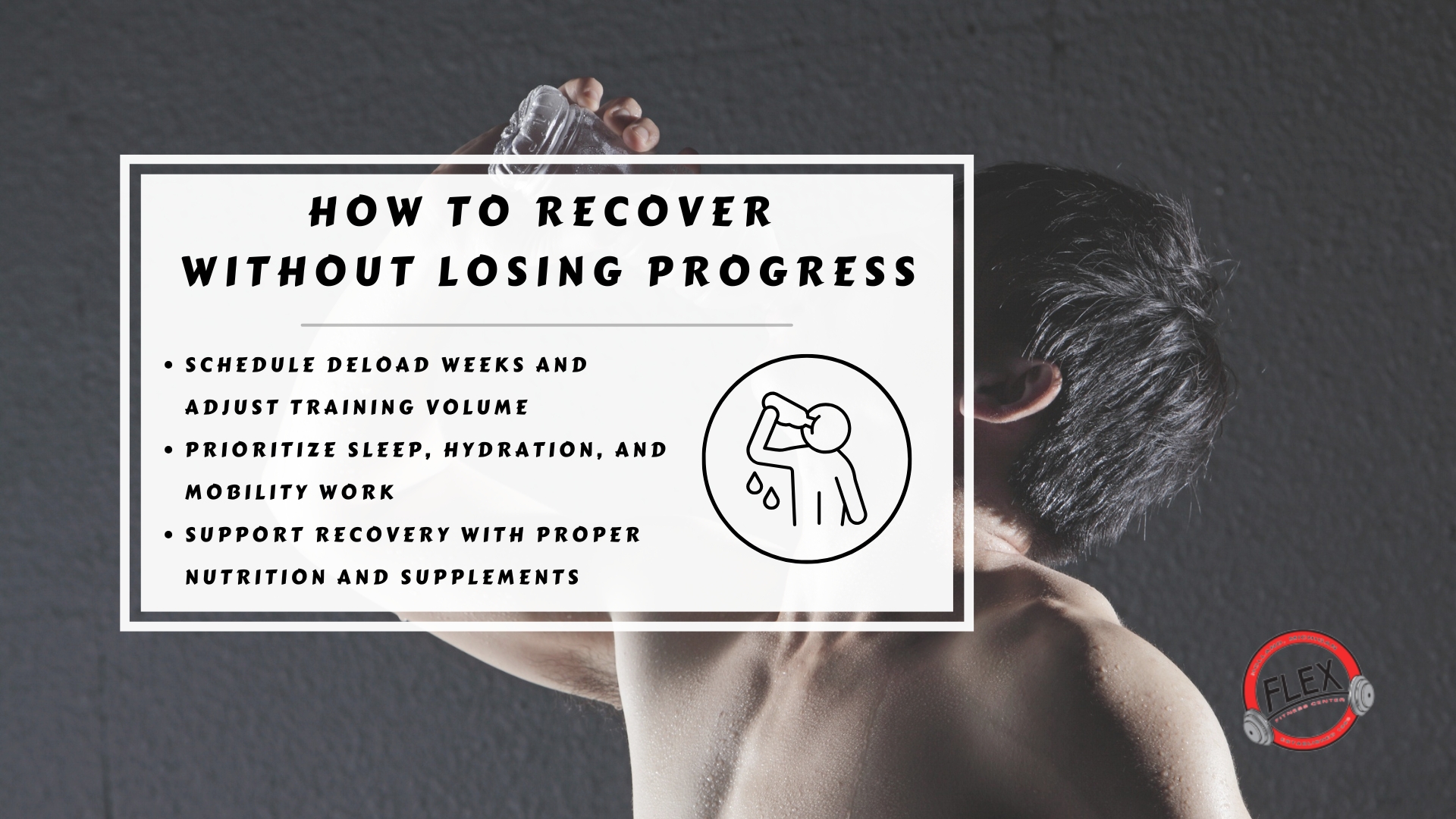
Schedule Deload Weeks and Adjust Training Volume
Every few weeks, give your body a chance to catch up by planning a deload week. That doesn’t mean quitting the gym, but temporarily reducing your training intensity or volume. Try lifting at 50 to 60% of your usual weight or cutting your total sets in half. These lighter weeks allow your muscles, joints, and central nervous system to recover while maintaining your strength and technique.
Prioritize Sleep, Hydration, and Mobility Work
Aim for seven to nine hours of quality sleep each night. During deep sleep, your body releases growth hormone and repairs damaged muscle tissue. Water helps transport nutrients to your muscles and flushes out waste products produced during intense training. Even mild dehydration can lead to reduced endurance and slower recovery. Pair hydration with daily mobility work, such as stretching or foam rolling, to improve circulation and keep your joints healthy.
Support Recovery with Proper Nutrition and Supplements
Make sure you’re eating enough calories to support your training level. Focus on lean proteins, complex carbohydrates, and healthy fats to replenish glycogen stores and promote muscle repair. Getting a protein-rich meal or shake within 30 minutes after your workout can help jumpstart muscle recovery. Supplements, including branched-chain amino acids (BCAAs), creatine, and omega-3s, can further support the healing process of your body.
Train Smarter with Flex Fitness
Flex Fitness Center is here to help you train smarter and build strength in a safe, effective way. Our certified personal trainers are ready to correct your form, choose the right weights, and design a plan that challenges you without pushing you into burnout. We also offer high-quality supplements from reputable brands to help you meet your nutrition and recovery needs. Visit our weight lifting gym in Holland, Michigan, today or contact us at (616) 396-2901 or here for more information.