30 Apr Intra-Workout Nutrition (Eating While Lifting): Does It Actually Improve Performance?
Intra-workout nutrition has become a popular topic among lifters who want to get more out of every training session, and you might have seen people sipping carb drinks, amino acids, electrolytes, or other best muscle growth supplements between sets and wondered if eating while lifting actually makes a difference. For some people, it can help. For others, it might not be necessary at all.
- What Intra-Workout Nutrition Means in Strength Training
- When Intra-Workout Nutrition Actually Improves Performance
- What to Consume During a Workout
- How to Use Intra-Workout Nutrition to Maximize Results
The idea behind intra-workout nutrition is simple: give your body fuel while you train so you can maintain energy and support performance from the first set to the last. But not every workout needs extra calories or supplements during training. A short weight-lifting session after a good meal is very different from a long, high-volume workout done fasted or after a physically demanding day.
Let’s explore how intra-workout nutrition works, when eating while lifting might improve performance, and whether it is worth adding to your training routine.
What Intra-Workout Nutrition Means in Strength Training
Intra-workout nutrition sits between pre-workout and post-workout nutrition. Pre-workout nutrition refers to what you eat or drink before training to give your body energy and prepare your muscles for the session ahead. Post-workout nutrition focuses on recovery after training that helps repair muscle and restore energy. Intra-workout nutrition, on the other hand, is what you consume during your workout, including water, electrolytes, carbohydrates, amino acids, or a light snack, depending on your fitness goals and training style.
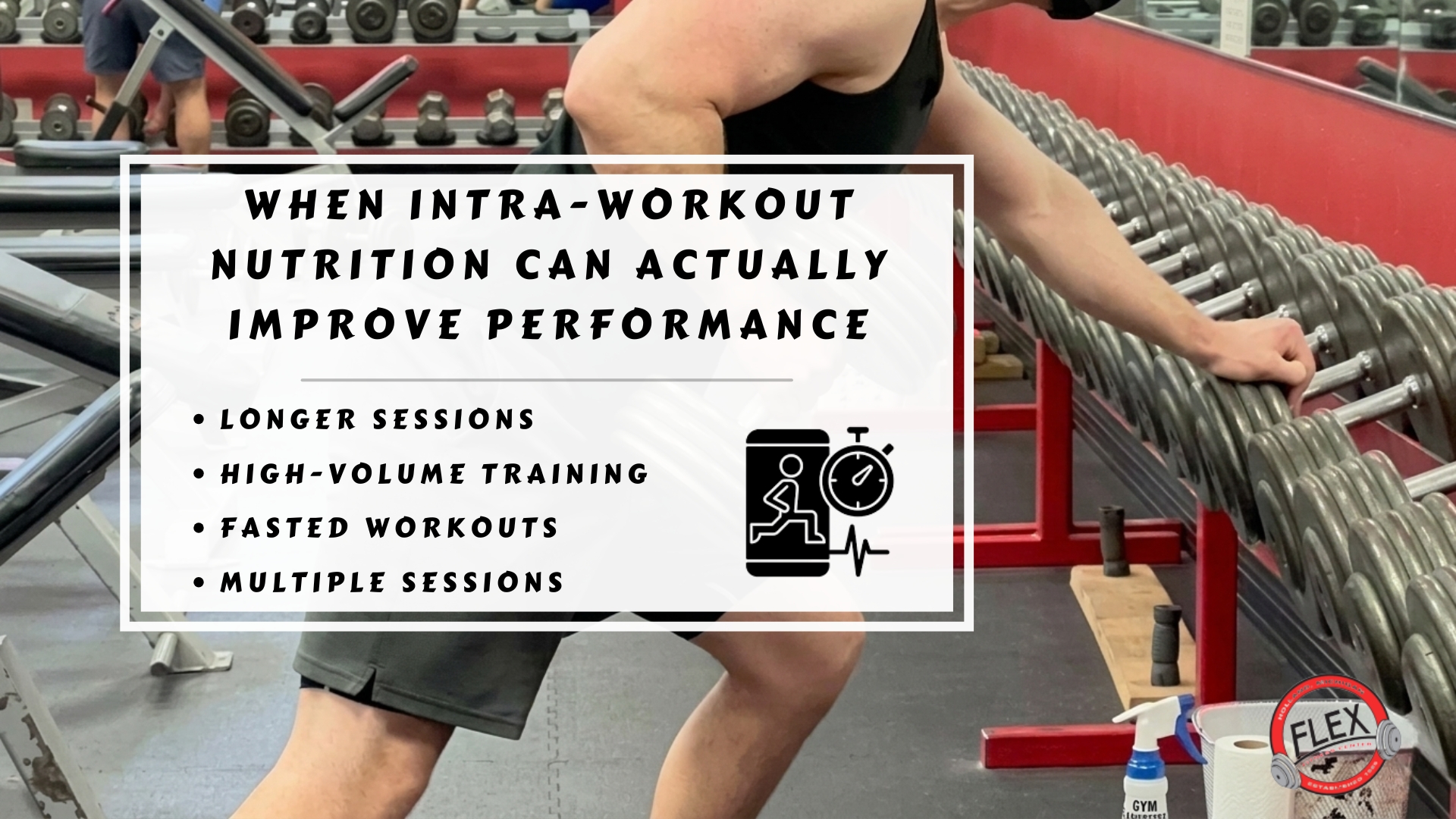
For strength training, intra-workout intake is most relevant when your sessions are long, intense, or physically draining. If you are lifting for 30 to 45 minutes and you ate a balanced meal beforehand, you probably do not need much more than water. But if you train for 60 to 90 minutes or longer, use high-volume sets, train while fasted, or do multiple workouts in one day, your body might benefit from extra fuel during the session. In those cases, intra-workout nutrition can help you maintain energy, reduce fatigue, and finish your workout with better effort.
When Intra-Workout Nutrition Actually Improves Performance
Intra-workout nutrition does not automatically make every workout better. Its value depends on your training length, intensity, schedule, and how well you are fueled before you start. Here are the situations where eating while lifting or drinking nutrients during your session might help:
Longer Sessions
Workout sessions that last 60 to 90 minutes or more can drain your energy, especially with heavy lifts, multiple muscle groups, or short rest periods. As the workout continues, you might notice slower reps, weaker pumps, longer rest needs, or a drop in focus. In that case, easily digestible carbohydrates can be useful. A carb drink, sports drink, or a small amount of quick-digesting food might help keep your energy from dropping too sharply. If your goal is muscle growth, keeping your output high across working sets can make your training more productive.
High-Volume Training
High-volume training often involves many sets, moderate to high reps, supersets, drop sets, or shorter rest periods. When you train that way, your muscles rely heavily on stored carbohydrates. As those stores start to decline, your performance might suffer. While you might still be able to finish the workout, your later sets might lack the same effort or quality. Using intra-workout nutrition during high-volume sessions might help you stay consistent from exercise to exercise. A simple drink with carbohydrates and electrolytes can be enough for many lifters.
Fasted Workouts
If you train fasted, especially early in the morning, intra-workout nutrition might improve how you feel and perform. Some people can lift well on an empty stomach, but others feel weak, lightheaded, or flat once the workout becomes challenging. That’s especially true if the session is long or includes demanding lifts, such as squats, deadlifts, presses, or rows. Eating while lifting does not have to mean chewing food between sets. A liquid option with carbohydrates, amino acids, or electrolytes might help give your body quick support without making you feel too full.
Multiple Sessions
Athletes who train multiple times per day have different needs from the average lifter. When you have two lifting sessions, a lifting session plus conditioning, or sport practice and gym work on the same day, for instance, recovery time becomes shorter, and your body has less time to replace energy, fluids, and electrolytes before the next session. In that situation, intra-workout intake can help reduce the gap between weight-lifting and recovery. Carbohydrates during the workout might help preserve energy, while fluids and electrolytes can support hydration.
What to Consume During a Workout
What you consume during a workout should be simple, easy to digest, and matched to the demands of your training. Note that intra-workout is about giving your body quick support when the workout is long, intense, or physically draining. The right option can help you maintain energy, stay hydrated, and keep your performance steady from start to finish.
-
- Quick Carbs
Carbs are the main fuel source of your body for long lifting sessions, high-volume bodybuilding workouts, or training that includes both weights and conditioning. When your workout drags on, your energy can dip, and your later sets might start to feel weaker. A small amount of carbs during training can help you keep your effort more consistent. Fast-digesting carbohydrates, in particular, are easier for your body to break down, making them helpful when you need fuel without feeling too full. Common options include a sports drink, carbohydrate powder mixed with water, fruit juice, or an easily digestible food.
-
- Electrolytes
Electrolytes help your body manage hydration, muscle function, and fluid balance during training. If you train in a hot gym or do longer sessions, electrolytes can be a smart addition to your intra-workout nutrition plan. Electrolytes can support your performance and reduce that sluggish feeling that comes from dehydration. For many lifters, electrolyte drinks are a simple and practical addition because such products are easy to consume between sets and do not interfere with training. If you often feel tired, crampy, or lightheaded during workouts, it might be worth paying closer attention to your fluid and electrolyte intake.
-
- Amino Support
Essential amino acids (EAAs) are amino acids your body cannot make on its own. Branched-chain amino acids (BCAAs) are a smaller group of amino acids that include leucine, isoleucine, and valine. These products are often used during workouts to support muscle protein balance, especially when you have not eaten enough protein before your session. If you train early in the morning, have long gaps between meals, or struggle to eat before lifting, amino acids might be a helpful addition. However, if you had enough protein throughout the day, EAAs or BCAAs might not make a dramatic difference on their own.
Remember, heavy meals are not ideal mid-session because digestion takes energy and time. When you eat a large meal during training, your body has to work on digesting that food while you are trying to lift, and that can leave you feeling bloated or uncomfortable, especially during exercises that require you to bend or exert intense effort. So, if you need intra-workout nutrition, keep it light.
How to Use Intra-Workout Nutrition to Maximize Results
Intra-workout nutrition works best when it matches your workout intensity and duration. If your session is short and moderate, and you ate a balanced meal beforehand, you might only need water. But if your workout is long, intense, fasted, or high-volume, adding quick carbs, electrolytes, or amino acids can help you stay energized and focused. Choose options that digest easily, avoid anything too heavy, and pay attention to how your body responds during training.
Along with our supportive gym environment, Flex Fitness Center offers high-quality supplements from reputable brands to support your workout and help you stay consistent with your fitness goals, including options for energy boost, hydration, and muscle recovery. If you want to improve your workouts and maximize your results with the right nutrition, visit our gym today or contact us at (616) 396-2901 or here for inquiries. We’re here to help you train with purpose and get more out of every session.